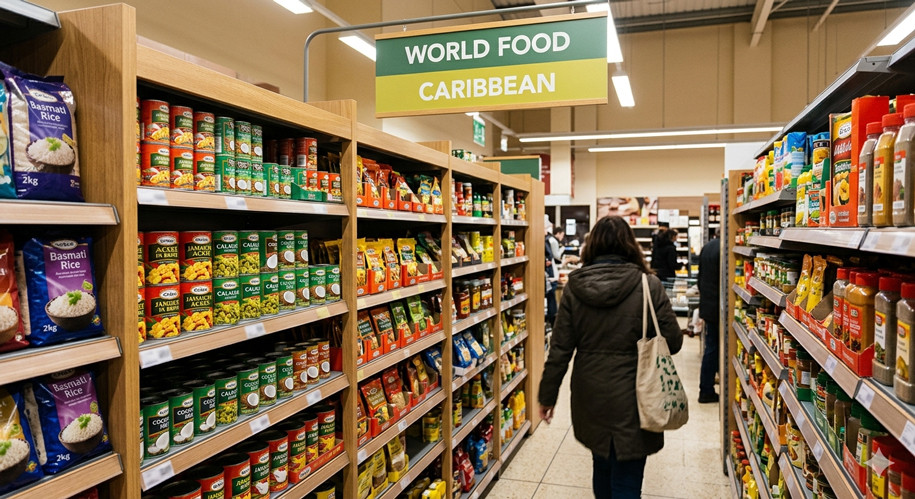
Recreating a true Jamaican breakfast away from home shouldn't feel like a lottery. Yet thousands of Caribbean nationals across the UK open an ackee tin every Sunday only to find a mushy, broken mess instead of firm, creamy arils.
If you are routinely searching for tesco ackee, asda ackee, or sainsburys ackee hoping for a genuine taste of the island, you need to understand the structural difference between mass-market retail logistics and a specialist supply chain.
The 12-Month Warehouse Trap
Mass retail operations depend on massive scale and slow, multi-tiered distribution networks to keep supermarket shelves full year-round. Whether you buy a generic store-brand or look for commercial mainstays like Dunn's River ackee or Grace ackee in a cash-and-carry, the physical journey of that canned ackee looks like this:
- Phase 1 — Port Consolidation (1–2 Months): Tins sit on heavy industrial pallets in Jamaican port warehouses waiting for bulk commercial shipping vessels.
- Phase 2 — Regional UK Distribution Centres (3–6 Months): Once docked in the UK, containers sit in massive temperature-fluctuating hubs as buffer stock.
- Phase 3 — The Retail Shelf Lag (1–3 Months): Tins are repeatedly shifted onto delivery trucks, into stockrooms, and finally onto retail displays.
Why Mass-Market Brine Destroys the Fruit
Inside every standard ackee tin, the fruit resides in a salted water solution. Over months of sitting stationary on warehouse floors and enduring heavy freight vibrations, the brine continuously penetrates the delicate cell walls of the arils. Constant micro-vibrations from heavy ocean and road freight slowly fray the fruit inside the tin. By month nine, even decent fruit breaks down — transforming into a soft paste the moment it encounters the residual heat of your frying pan.
Stop buying fruit that has survived a year-long logistics marathon.
The Specialist Solution
We launched BuyAckee because you shouldn't have to settle for subpar ingredients just because you live in the UK. We deal exclusively in hand-picked Grade A1 Jamaican ackee, move stock in tightly managed rapid batches, and ship direct to your door — minimising handling stress and preserving structural integrity from island to kitchen.
Our parent brand 876BOX has been sourcing authentic Jamaican goods direct from the island since our founding. Every crate of ackee we ship follows the same zero-compromise sourcing standard.
Ready to Cook the Real Thing?
Authentic Jamaican ackee — Grace, Linstead Market and Vineyard — delivered direct from Jamaica to your door. Better than anything in the supermarket.
Secure Your Crate →
